
DISCOVER PAXOS: The Ionian’s Hidden Jewel
A Sanctuary of Sophistication and Serenity
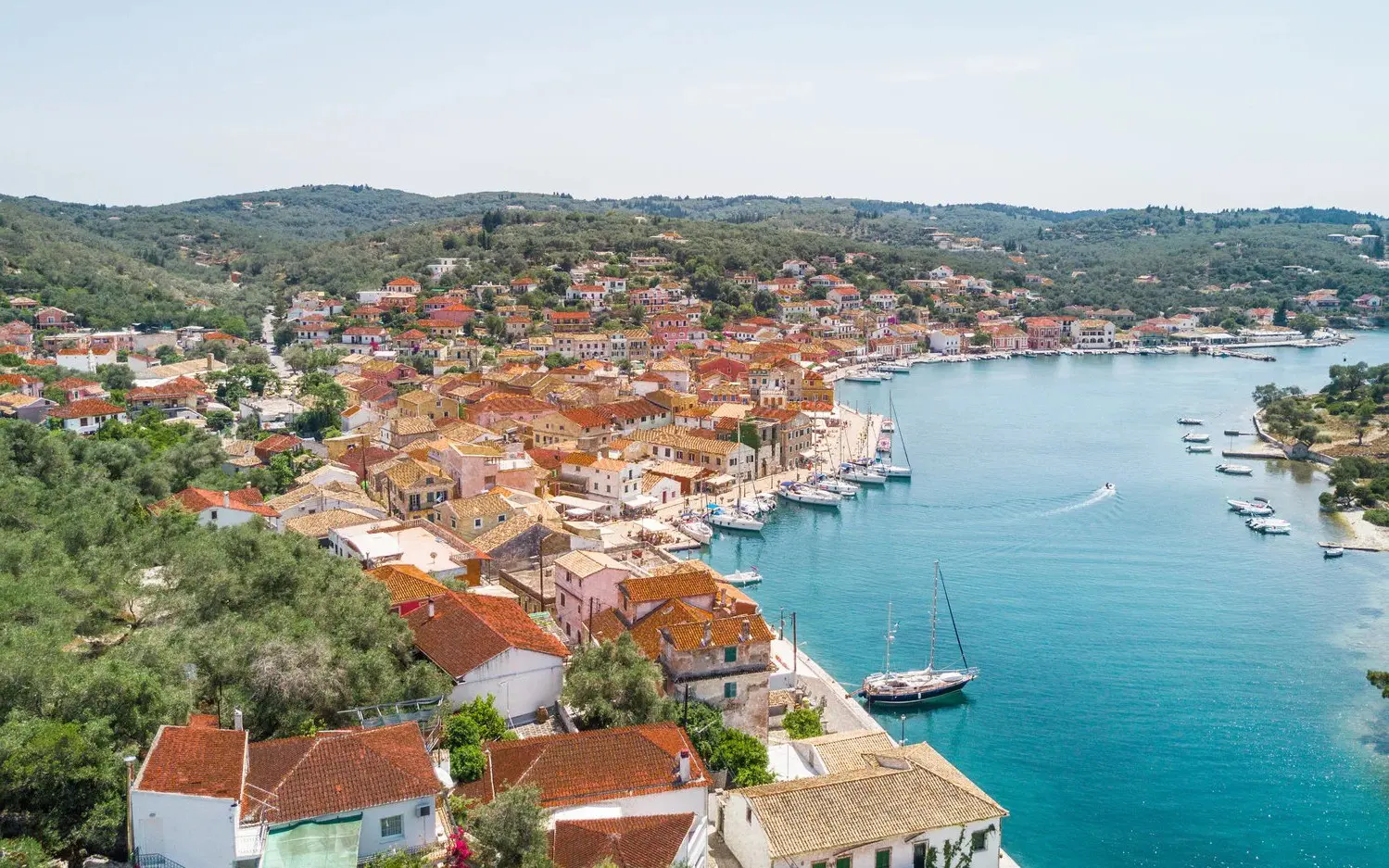
The Secret Garden
If Corfu is the Queen of the Ionian, Paxos is the hidden Princess—elusive, exclusive, and breathtakingly beautiful.
Stepping onto Paxos is not merely an arrival; it is a decompression. There is no airport here. You arrive by sea, usually via a hydrofoil or sea taxi that cuts through the channel from Corfu. As you approach, the island rises from the mist like a floating olive grove.
Paxos is the smallest of the main Ionian islands, but what it lacks in size, it makes up for in concentrated beauty and atmosphere. It has long been the secret escape for the European elite, a place where shipping magnates and artists dock their yachts in sheltered coves to escape the noise of the modern world.
This is an island of intimacy. There are no sprawling resorts, no water parks, no traffic lights. Instead, you find a landscape painted in just three colors: the silver-green of ancient olive trees, the blinding white of limestone cliffs, and a kaleidoscope of blues that must be seen to be believed.
To choose Paxos is to join a quiet fraternity of travelers who understand that true luxury is silence, nature, and time.
I. The Three Pearls: Gaios, Loggos, Lakka
Paxos life revolves around its three main coastal villages, each with a distinct personality, yet all strung together by a single winding road.
Gaios: The Venetian Heart The capital, Gaios, is a masterpiece of natural geography. The harbor is protected by the islet of Agios Nikolaos, creating a fjord-like entrance that feels more like a river than the sea. Walking the waterfront, you pass 19th-century mansions painted in ochre and terracotta. In the evening, the promenade transforms into a cosmopolitan runway where locals and visiting sailors sip cocktails as fishing boats bob alongside superyachts.
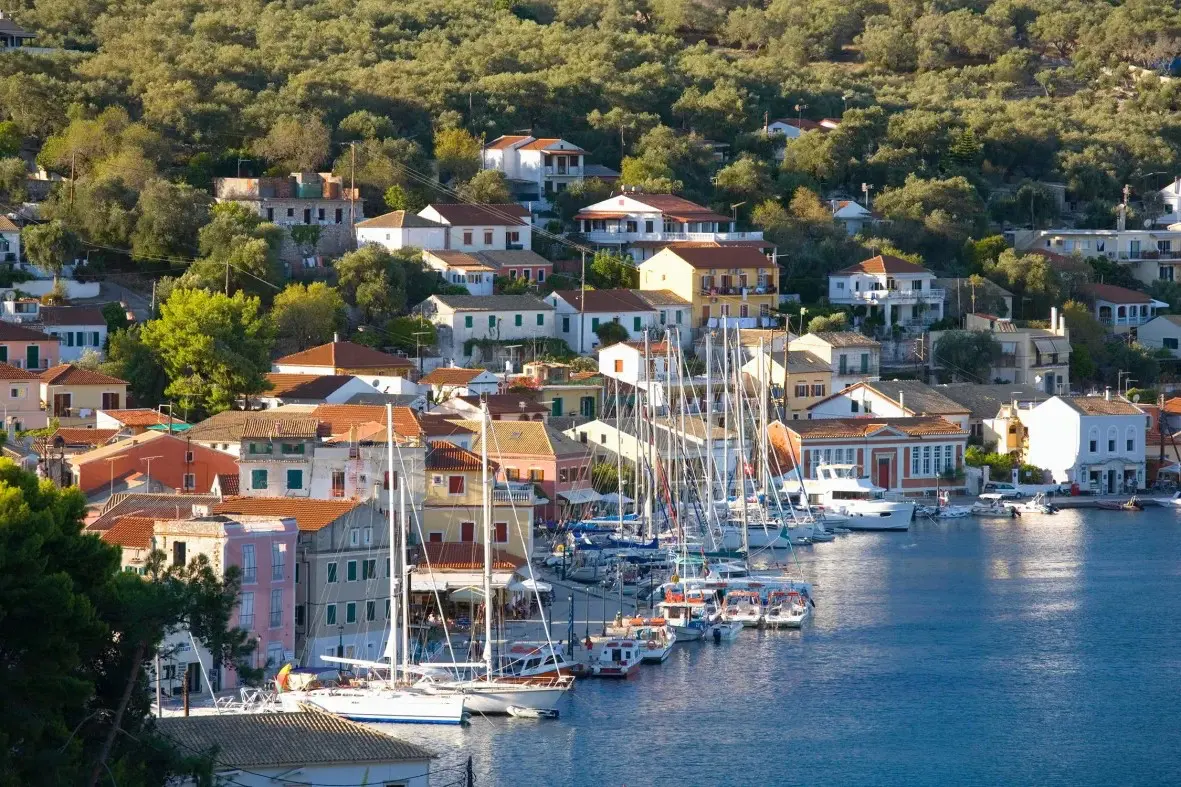
Loggos: The Gastronomic Soul Small, sleepy, and stunningly picturesque, Loggos is the island’s culinary treasure. Here, colorful houses dip their toes directly into the water. There is no separation between the sea and the dining tables; you eat your fresh lobster pasta to the sound of water lapping against the stone quay. It is arguably the most romantic spot in the Ionian.
Lakka: The Sapphire Bay Nestled in the north, Lakka sits inside a deep, horseshoe-shaped bay that protects it from the open sea. The water here is shallow, warm, and a startling shade of turquoise. It is a favorite for families and windsurfers, offering a laid-back, barefoot vibe that feels miles away from the rest of the world.
II. The Turquoise & The Stone: A Tale of Two Coasts
Paxos is a geological wonder, offering two completely different experiences depending on which way you turn your gaze.
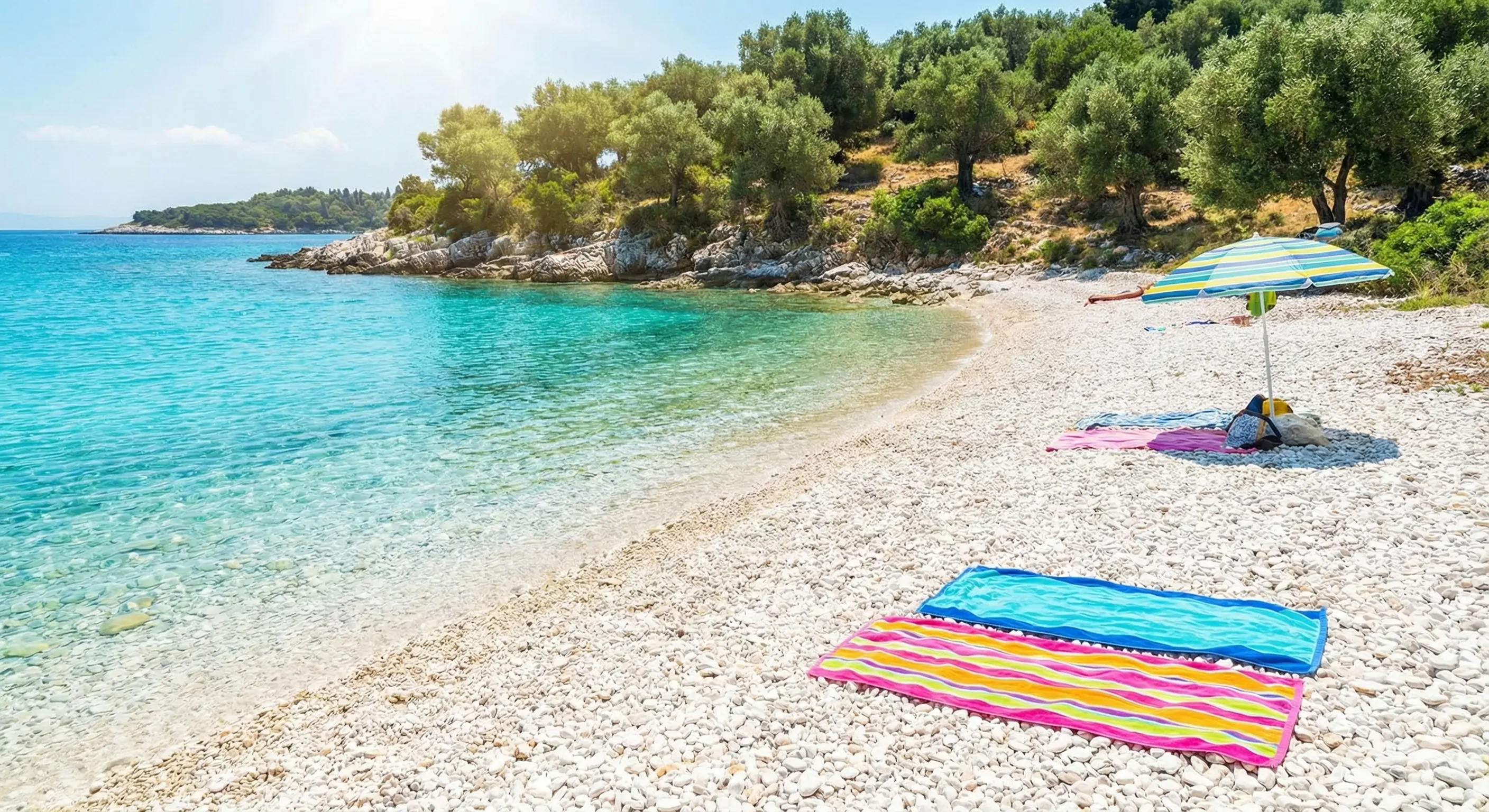
The East Coast: Pebble Paradises The eastern shoreline is a lace-work of tiny, sheltered coves. The beaches here, Monodendri, Kipiadi, Marmari, are composed of smooth white pebbles that keep the water famously clear. Olive trees grow right down to the water’s edge, providing natural shade. It is a gentle, serene landscape perfect for lazy days of snorkeling and reading.
The West Coast: The Wild Atlantic Cross the island’s spine, and the scenery becomes dramatic. Massive limestone cliffs plunge hundreds of meters into a deep indigo sea. This is the realm of the Blue Caves (Ypapanti), caverns so large that ships can enter them, where the water glows an electric, neon blue. At the magnificent Erimitis cliffs, you can witness one of the most celebrated sunsets in Greece, watching the sun melt into the open sea from a sheer precipice.
The Caribbean of Europe: Antipaxos No description of Paxos is complete without its little sister, Antipaxos. A mere 15-minute boat ride south lies an uninhabited paradise (save for a few vineyards) home to Voutoumi and Vrika beaches. Here, the pebbles give way to soft, white sand, and the water is a swimming-pool blue that rivals the Maldives.
III. Liquid Gold: A Culinary Heritage
In Paxos, food is not just sustenance; it is history. The entire island is essentially one giant olive grove. The trees here are taller and older than those on other islands, planted by the Venetians centuries ago.
From these ancient "Lianolia" trees comes the island’s Liquid Gold; an olive oil so rich and high in polyphenols that it is considered a health elixir.
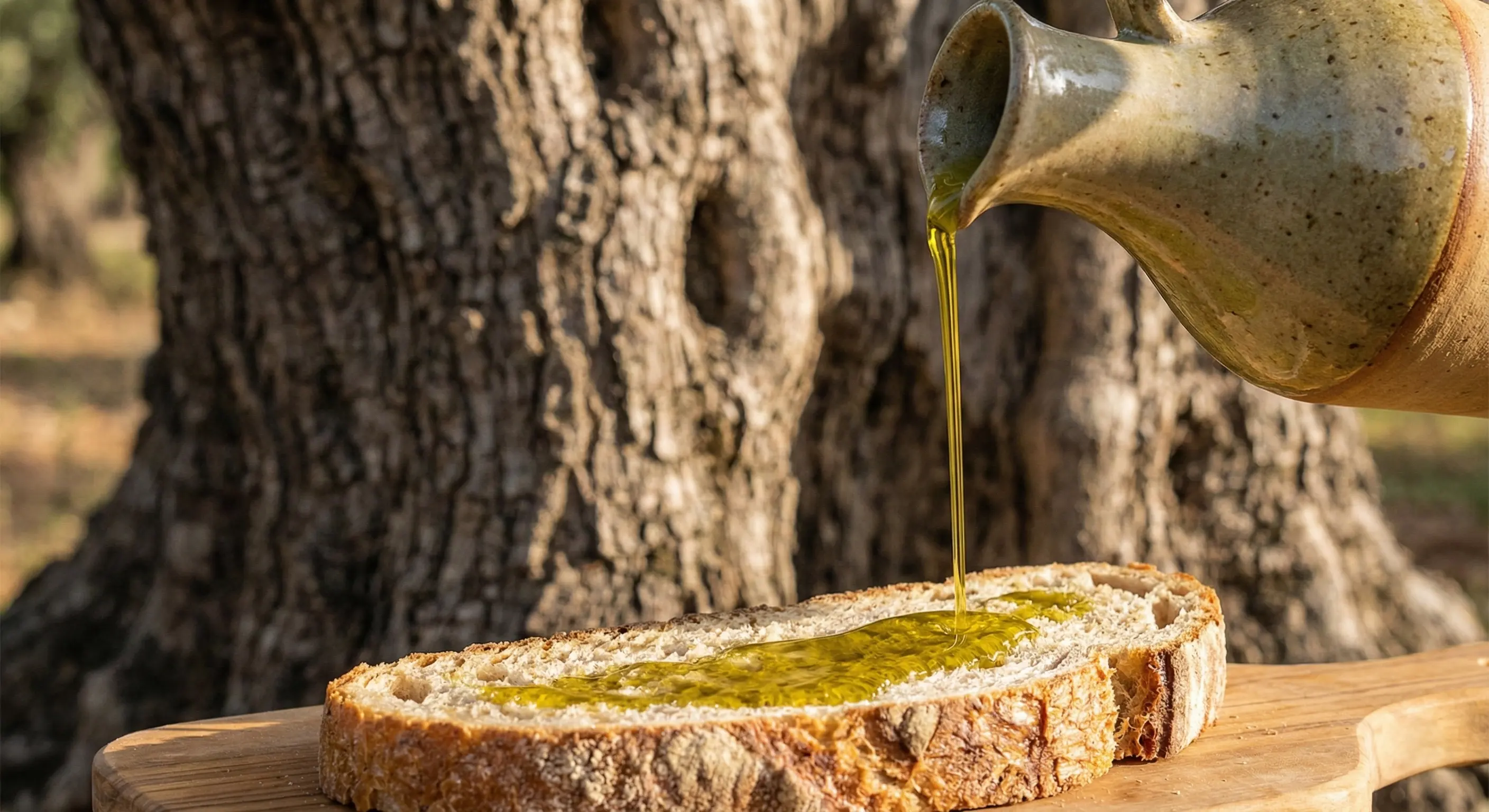
The Paxos Pantry:
- Seafood: In the tiny tavernas of Loggos, the fish is often caught by the owner that same morning. Expect grilled octopus, fresh urchin salad, and the catch of the day served simply with lemon and oil.
- Paximadia: These traditional rusks (double-baked bread) are a staple, often served soaked in water and olive oil, topped with fresh tomatoes and feta.
- Wine: The tiny vineyards of Antipaxos produce rare, potent local wines (mostly white and rosé) that are difficult to find anywhere else. They are the perfect accompaniment to a long, lazy lunch.
IV. The Art of Slowing Down
Paxos is not for those who seek the adrenaline of nightlife or the rush of sightseeing checklists. It is for the traveler who has mastered the art of living.
The "sightseeing" here consists of renting a small boat and becoming the captain of your own day, drifting from cove to cove. It consists of walking ancient stone paths through shady valleys to find ruined windmills and hidden churches. It consists of sitting in a kafenio in the main square of Gaios, watching the world go by until the shadows lengthen.
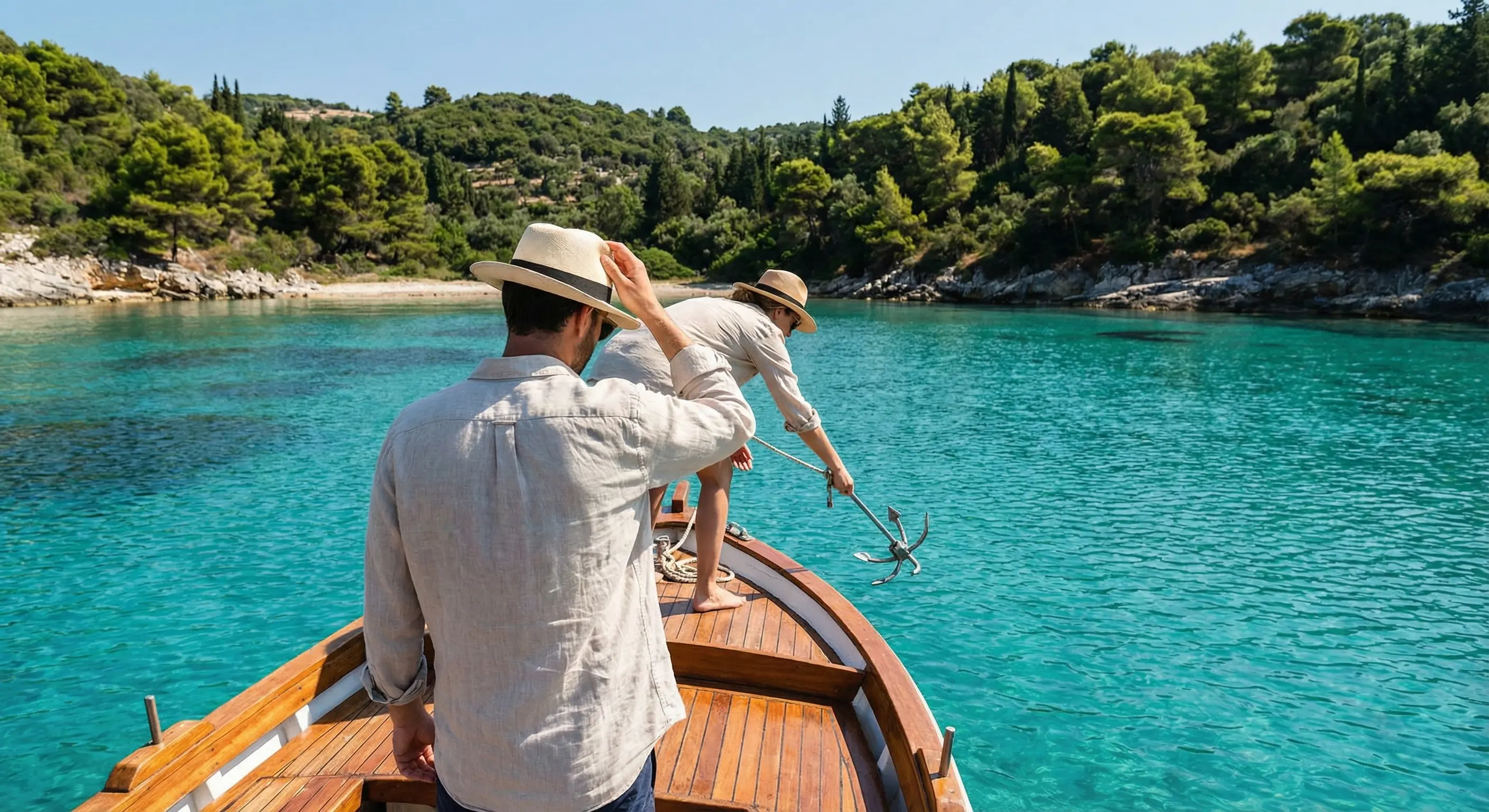
There is a sophistication to the simplicity of Paxos. It is unpretentious yet deeply exclusive. It demands nothing of you, yet gives you everything you need to restore your spirit.
An Eternal Invitation
Paxos is a reminder of what the Mediterranean used to be. It is a place where nature is still the dominant force, and where the rhythm of the day is dictated by the sun and the sea.
For the traveler seeking to disconnect from the noise and reconnect with beauty, there is no better sanctuary. Paxos does not just welcome you; it keeps a piece of your heart forever.
Come and discover the jewel of the Ionian.